

Vitreoretinal surgery is one of the most specialised and delicate fields in ophthalmology, dealing with conditions that affect the back of the eye — specifically the vitreous (the gel-like fluid inside the eye) and the retina (the light-sensitive tissue lining the inner wall). At Krishna Eye Care Centre, these procedures are performed by Dr Meha Kantha, a Gold Medalist MS Ophthalmologist and Fellowship-trained Vitreoretinal Surgeon with extensive clinical experience from institutions including Shroff Charitable Eye Hospital, New Delhi.
Who Needs Vitreoretinal Surgery?
Vitreoretinal surgery is recommended for patients suffering from conditions that affect the posterior segment of the eye. Left untreated, many of these conditions can lead to permanent vision loss.
Conditions treated include:
- Retinal Detachment — when the retina separates from the back wall of the eye, causing sudden vision loss or flashes of light
- Diabetic Retinopathy — bleeding or scarring inside the eye caused by diabetes-related damage to blood vessels
- Macular Hole — a small break in the macula that causes blurred or distorted central vision
- Epiretinal Membrane — a thin layer of scar tissue over the macula that distorts and reduces sharpness of vision
- Vitreous Haemorrhage — bleeding inside the eye due to trauma, diabetes, or other vascular conditions
- Intraocular Infections (Endophthalmitis) — severe infections inside the eye requiring urgent surgical intervention
- Intraocular Foreign Bodies — removal of objects that have penetrated the eye due to injury
- Complex Cataracts — cataracts with associated posterior segment complications
The Procedure: What to Expect
Pre-Surgery Assessment
Before surgery, a thorough eye examination is performed including retinal imaging, ultrasound B-scan, and OCT (Optical Coherence Tomography) to map the extent of damage and plan the surgical approach.
The Surgery
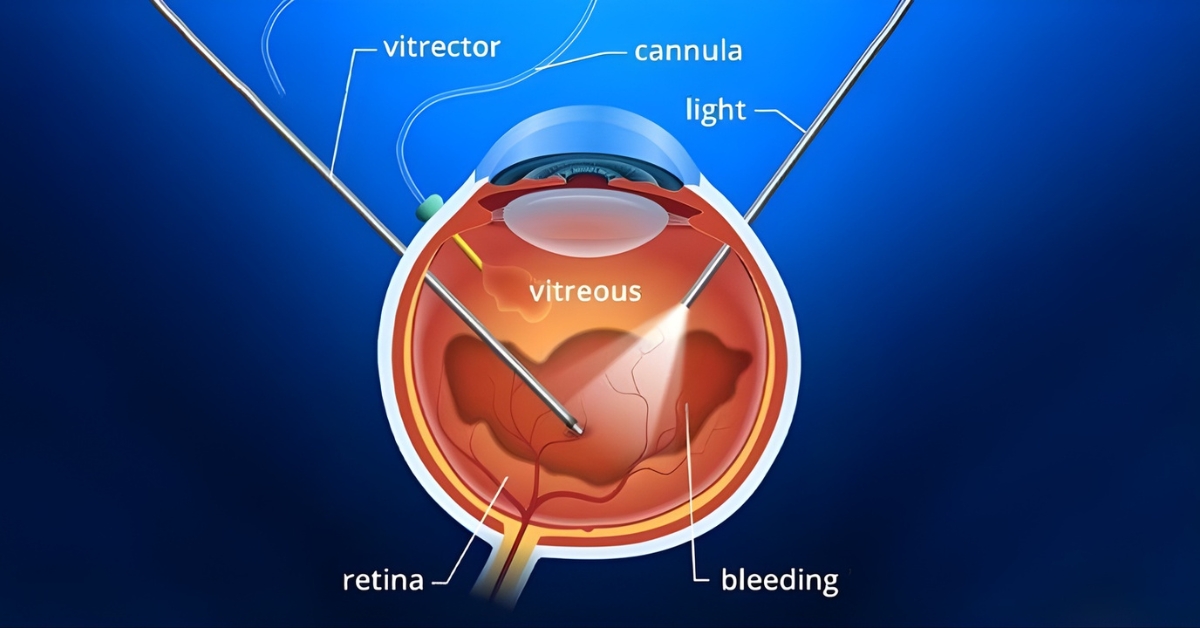
The most common vitreoretinal procedure is vitrectomy — a microsurgical technique involving three small incisions in the white part of the eye (sclera). Tiny precision instruments are inserted to:
- Remove the vitreous gel
- Peel scar tissue or membranes from the retina
- Repair retinal tears or detachments
- Drain fluid from under the retina
- Apply laser treatment to seal the retina
- Fill the eye with gas, air, or silicone oil to hold the retina in place during healing
The surgery is performed under local or general anaesthesia and typically takes between 30 minutes to 2 hours, depending on complexity.
Post-Surgery Recovery
Recovery time varies from patient to patient. Some key points:
- You may be required to maintain a specific head posture (e.g., face-down) for a few days if gas was used
- Vision may be blurry initially and gradually improve over weeks
- Follow-up visits are critical to monitor healing
- Avoid strenuous activity, swimming, or flying until cleared by your doctor
- Full recovery may take 4 to 8 weeks depending on the procedure
Why Choose Krishna Eye Care Centre?
- Led by Dr Meha Kantha, Gold Medalist (MS Ophthalmology, RIO Kolkata) and Fellowship-trained Vitreoretinal Surgeon
- Experience across institutions including Disha Eye Hospital (Barrackpore), Renu Eye Hospital, and Bilas Netralaya (Patna)
- Patient-first approach with detailed pre- and post-operative counselling
- Affordable, accessible care in line with the founding values of Dr K K Kantha Memorial Hospital
Risks & Considerations
As with any surgical procedure, vitreoretinal surgery carries potential risks. These are rare but important to be aware of:
- Infection or bleeding inside the eye
- Raised intraocular pressure (glaucoma)
- Development or worsening of cataract
- Re-detachment of the retina
- Partial or incomplete vision recovery
Your surgeon will discuss these risks in detail during your consultation and help you make an informed decision.
Frequently Asked Questions
Q: Will vitreoretinal surgery restore my vision completely?
Outcomes depend on several factors — the type and severity of the condition, how long it has been present, your age, and overall health. While many patients experience significant improvement, complete restoration of vision is not always possible, particularly if the retina or macula has been damaged for a prolonged period. Dr Meha Kantha will give you a realistic assessment during your consultation.
Q: Is the surgery painful?
The procedure is performed under anaesthesia, so you will not feel pain during surgery. Some discomfort, redness, or irritation may be present in the days following the procedure, which is managed with prescribed medications.
Q: How long will I need to take off work?
Most patients need 1 to 3 weeks off work depending on the nature of their job and the complexity of the surgery. Those with physically demanding roles or jobs requiring prolonged screen use may need a longer recovery period.
Q: What is the gas bubble used for after surgery?
In many retinal procedures, the vitreous is replaced with a gas bubble that gently presses the retina back against the wall of the eye while it heals. The bubble gradually absorbs on its own over days to weeks. During this time, you must maintain a specific head position as instructed by your surgeon.
Q: Can I fly after vitreoretinal surgery?
If a gas bubble has been used, flying is strictly prohibited until the bubble has fully absorbed — usually 6 to 8 weeks. Changes in air pressure at altitude can cause the gas to expand, dangerously raising intraocular pressure.
Q: Is vitreoretinal surgery available in Patna?
Yes. Dr Meha Kantha performs vitreoretinal surgery at Krishna Eye Care Centre, Dr K K Kantha Memorial Hospital, located at 21 B/3, Patliputra Colony, Patna 800 013.
Book a Consultation
If you or a family member are experiencing sudden vision loss, flashes of light, floaters, or distorted central vision, do not delay. Early intervention significantly improves outcomes in vitreoretinal conditions.
📞 +91 893 583 4142 | +91 886 400 4584
📍 21 B/3, Patliputra Colony, Near Pataliputra Golambar, Opp. UNICEF Building, Patna 800 013
🌐 Book online at kanthahospital.com