

Neuro Ophthalmology sits at the intersection of two highly specialised fields — neurology and ophthalmology. It focuses on vision problems that originate not in the eye itself, but in the brain, optic nerve, or nervous system. At Krishna Eye Care Centre, Dr Meha Kantha brings specialist expertise in evaluating and managing these complex conditions, offering patients in Patna access to a level of care that has traditionally required travel to larger metropolitan centres.
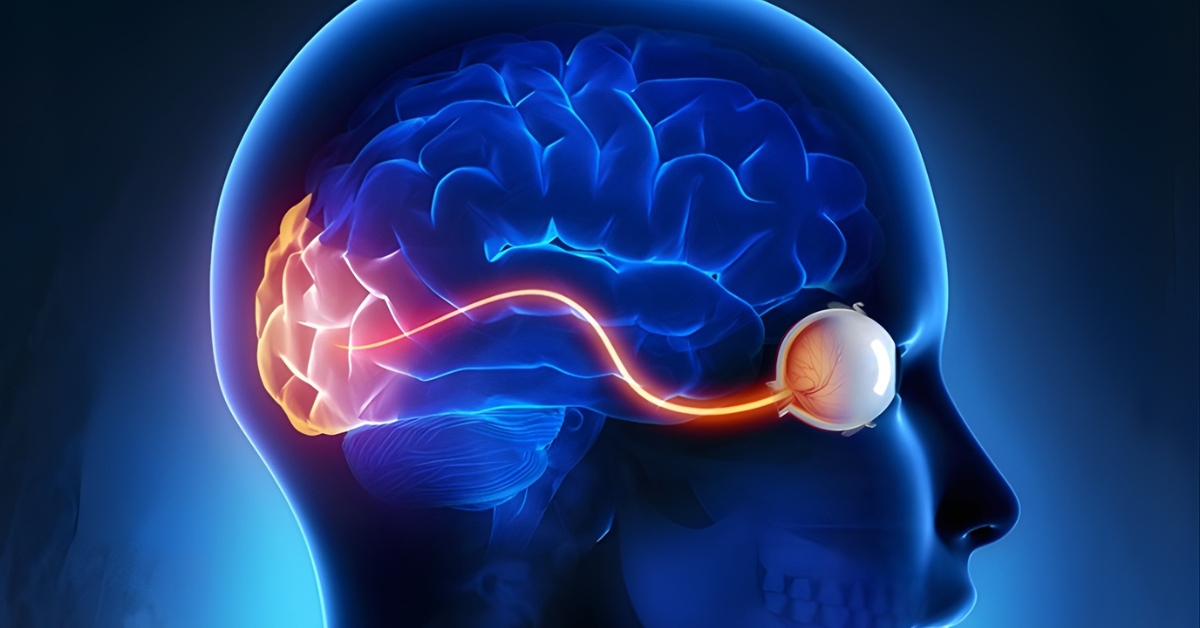
What Is Neuro Ophthalmology?
Many vision problems have nothing to do with the physical structure of the eye. Instead, they arise from damage or disease affecting the visual pathways — the network of nerves and brain structures that process what the eye sees. Neuro ophthalmology diagnoses and manages exactly these kinds of conditions, bridging the gap between eye care and neurological medicine.
Conditions We Treat
Optic Nerve Disorders
- Optic Neuritis — inflammation of the optic nerve, often associated with multiple sclerosis
- Ischaemic Optic Neuropathy — reduced blood supply to the optic nerve causing sudden vision loss
- Optic Nerve Compression — from tumours, thyroid eye disease, or raised intracranial pressure
- Optic Atrophy — progressive degeneration of the optic nerve fibres
Visual Field Defects
- Hemianopia — loss of vision on one side of the visual field, often following a stroke
- Scotomas — blind spots in the visual field
- Visual field loss from brain tumours or head injuries
Eye Movement Disorders
- Diplopia (double vision) — caused by nerve palsies affecting the muscles that move the eye
- Nystagmus — involuntary rhythmic eye movement
- Gaze palsies — inability to move both eyes together in a particular direction
Pupil Abnormalities
- Horner’s Syndrome — drooping eyelid with a small pupil, indicating a nerve pathway problem
- Adie’s Pupil — abnormally dilated pupil with slow reaction to light
- Relative Afferent Pupillary Defect (RAPD) — a sign of optic nerve or retinal disease
Neurological Conditions Affecting Vision
- Migraine with visual aura
- Idiopathic Intracranial Hypertension (pseudotumour cerebri) — raised brain pressure causing visual symptoms and headaches
- Multiple Sclerosis — a demyelinating disease frequently presenting with visual disturbances
- Stroke-related vision loss
- Brain tumours affecting visual pathways
How Is Neuro Ophthalmology Diagnosed?
Diagnosis in neuro ophthalmology requires a thorough and methodical approach because symptoms often overlap with several different conditions.
The evaluation typically includes:
- Detailed history of symptoms, onset, and progression
- Visual acuity and visual field testing
- Colour vision assessment
- Pupil examination under varying light conditions
- Eye movement and alignment testing
- Fundoscopy to examine the optic disc and retina
- OCT (Optical Coherence Tomography) of the optic nerve
- Coordination with neurologists for MRI or CT imaging when indicated
- Blood tests to rule out systemic or inflammatory causes
Treatment Approaches
Treatment in neuro ophthalmology depends entirely on the underlying cause. Because many conditions involve the nervous system or brain, management is often multidisciplinary.
Treatment options may include:
- Corticosteroids — for optic neuritis or inflammatory optic nerve disease
- Pressure-lowering treatment — for idiopathic intracranial hypertension
- Prisms in spectacles — to correct double vision and improve daily function
- Patching — for diplopia management in selected cases
- Referral and co-management with neurology — for stroke, MS, or brain tumour-related conditions
- Monitoring and surveillance — for stable conditions requiring regular review
- Vision rehabilitation — for patients with permanent visual field loss
Warning Signs You Should Not Ignore
Some neuro ophthalmic conditions are medical emergencies. Seek immediate care if you experience:
- Sudden loss of vision in one or both eyes
- Double vision appearing without warning
- Severe headache with visual disturbance
- Vision loss accompanied by weakness, numbness, or difficulty speaking
- A drooping eyelid with unequal pupil sizes
- Transient vision loss lasting seconds to minutes (amaurosis fugax)
Frequently Asked Questions
Q: How is neuro ophthalmology different from regular eye care?
Regular optometry and ophthalmology focus on the eye itself — the lens, cornea, retina, and surrounding structures. Neuro ophthalmology focuses on vision problems caused by conditions in the brain, optic nerve, and nervous system. If your eye examination is normal but your vision is still affected, a neuro ophthalmology evaluation may be needed.
Q: Can vision loss from a neurological cause be reversed?
It depends on the cause and how quickly treatment is started. Conditions like optic neuritis often recover well, especially with timely steroid treatment. However, vision loss from optic atrophy, stroke, or long-standing nerve compression may be permanent. Early diagnosis greatly improves the chances of recovery.
Q: I have been told my vision loss may be related to a brain tumour. What should I do?
This requires urgent evaluation by both an ophthalmologist and a neurologist or neurosurgeon. Dr Meha Kantha can assess the visual component and coordinate referral to the appropriate specialist. Please do not delay seeking care.
Q: Does migraine cause permanent vision loss?
In the vast majority of cases, migraine-related visual symptoms (aura) are temporary and resolve on their own. However, a rare condition called ocular migraine can occasionally cause prolonged symptoms. Persistent or changing visual symptoms in a migraine patient should always be evaluated to rule out other causes.
Q: My child has been diagnosed with nystagmus. Can it be treated?
Nystagmus has various causes and management depends on the underlying type. Some forms improve with age or with treatment of the underlying condition. Spectacles, contact lenses, and in some cases surgery can help reduce its severity. A thorough evaluation is recommended to determine the best course of action for your child.
Q: Is this service available in Patna?
Yes. Neuro Ophthalmology consultations are available at Krishna Eye Care Centre, Dr K K Kantha Memorial Hospital, Patna.
Book a Consultation
If you are experiencing unexplained vision changes, persistent double vision, visual field loss, or any vision symptoms linked to a neurological condition, early evaluation is essential.
📞 +91 893 583 4142 | +91 886 400 4584
📍 21 B/3, Patliputra Colony, Near Pataliputra Golambar, Opp. UNICEF Building, Patna 800 013
🌐 Book online at kanthahospital.com