

Cataract is the world’s leading cause of treatable blindness — and the good news is that it is almost always correctable with a safe, well-established surgical procedure. If you have been told you have a cataract, or if your vision has been gradually becoming cloudy, hazy, or dull despite a current spectacle prescription, cataract surgery may be the most transformative thing you can do for your eyesight.
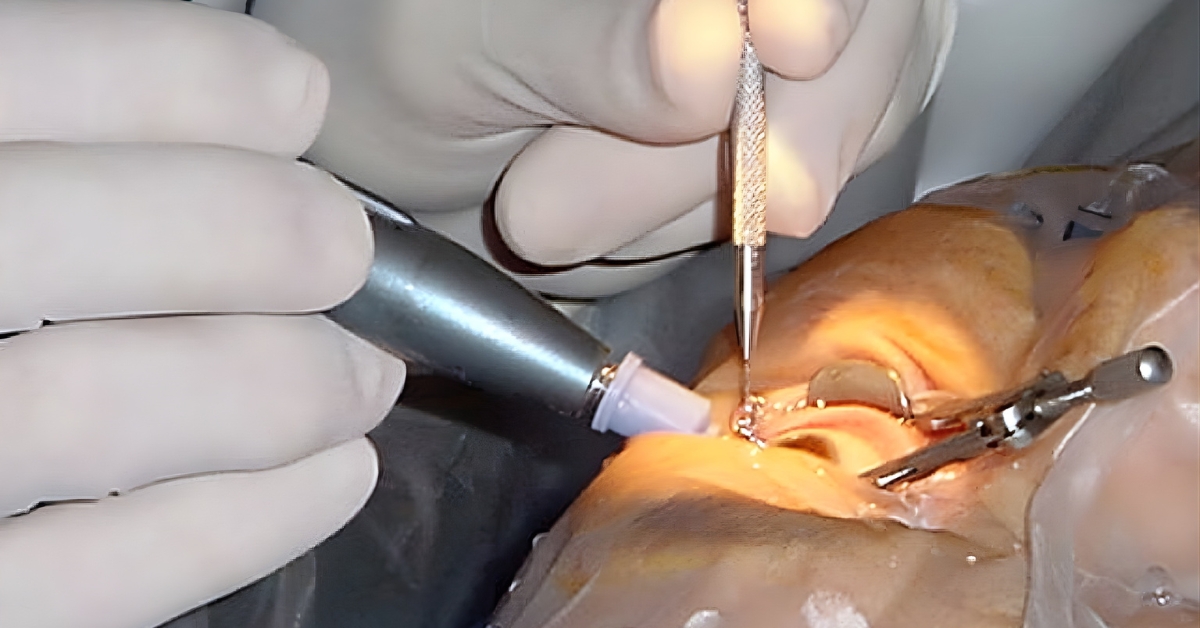
At Krishna Eye Care Centre, cataract surgery is performed by Dr Meha Kantha with a focus on precision, safety, and outcomes that go beyond simply removing the cloudy lens — giving patients the clearest possible vision for their lifestyle and needs.
What Is a Cataract?
The natural lens of the eye sits just behind the iris and pupil. In a healthy young eye, this lens is perfectly clear and flexible, allowing sharp focus at all distances. A cataract develops when proteins within the lens begin to break down and clump together, causing the lens to become cloudy. This cloudiness scatters light entering the eye rather than focusing it cleanly on the retina, resulting in progressively blurred, hazy, or distorted vision.
Cataracts are most commonly a result of ageing, but they can also develop from injury, certain medications, systemic diseases, or be present from birth.
Types of Cataract
Age-Related (Senile) Cataract The most common type. Develops gradually as a natural part of the ageing process. Most people begin to develop some degree of lens clouding from their mid-forties onwards, though significant visual impairment typically occurs in the sixties and beyond.
There are three subtypes based on the location within the lens:
- Nuclear Cataract — develops at the centre of the lens; causes progressive myopia shift (patients may temporarily find they can read without glasses) and increasing yellow-brown discolouration affecting colour perception
- Cortical Cataract — develops in the outer layers of the lens as spoke-like opacities; causes glare and light scatter, particularly troublesome with oncoming headlights when driving
- Posterior Subcapsular Cataract (PSC) — develops at the back of the lens directly in the visual axis; causes disproportionately early visual impairment, particularly with reading and in bright light; associated with steroid use and diabetes
Congenital Cataract Present at birth or developing in early infancy. Requires prompt treatment to prevent amblyopia (lazy eye) from developing due to visual deprivation during the critical period of visual development.
Traumatic Cataract Develops following an eye injury — blunt trauma, penetrating injury, or exposure to chemicals, radiation, or electric current. Can develop rapidly or over months to years depending on the nature of the injury.
Secondary Cataract Develops as a consequence of another eye condition (such as uveitis or high myopia) or systemic disease (such as diabetes). Also associated with long-term corticosteroid use.
Symptoms of Cataract
Cataracts develop gradually and symptoms may be subtle at first. As the cataract matures, the following become more pronounced:
- Blurred, hazy, or foggy vision that cannot be fully corrected with spectacles
- Increasing difficulty with night vision and driving after dark
- Sensitivity to bright lights, glare, and oncoming headlights
- Seeing haloes around lights
- Colours appearing faded, yellowed, or less vivid
- Frequent changes in spectacle prescription
- Double vision in one eye
- Difficulty reading even with adequate lighting and spectacles
When Should Cataract Surgery Be Considered?
There is no absolute rule. Surgery is recommended when the cataract is affecting your quality of life — when vision loss interferes with daily activities such as reading, driving, watching television, recognising faces, or performing your work safely.
You do not need to wait until the cataract is “ripe” or “mature.” In fact, very advanced cataracts are technically more challenging to remove and carry a slightly higher surgical risk. Operating when the cataract is causing meaningful visual impairment but before it becomes hypermature is generally preferable.
Your surgeon will assess the cataract alongside the health of the rest of your eye and advise on the optimal timing for your situation.
The Surgical Procedure
Pre-Operative Assessment
Before surgery, a thorough examination is performed to measure the eye and calculate the precise power of the intraocular lens (IOL) implant that will replace your natural lens. This is called biometry. Accurate biometry is critical to achieving the best possible visual outcome.
Measurements include:
- Axial length of the eye
- Corneal curvature (keratometry)
- Anterior chamber depth
- Corneal topography where relevant
The Surgery
Modern cataract surgery — phacoemulsification — is a highly refined microsurgical procedure performed through a tiny self-sealing incision, typically less than 3mm in size. It does not require stitches in most cases.
The steps involved are:
- A small incision is made at the edge of the cornea
- A circular opening is created in the front of the lens capsule (capsulorhexis)
- An ultrasound probe is inserted to emulsify (break up) the cloudy lens into tiny fragments
- The fragments are gently aspirated out of the eye
- The clear elastic capsule that held the natural lens is left in place
- A foldable artificial intraocular lens (IOL) is inserted through the same tiny incision and unfolds within the capsule
The surgery is typically performed under local anaesthesia with eye drops or a small injection, meaning you are awake but feel no pain. It usually takes 15 to 30 minutes per eye.
Intraocular Lens (IOL) Options
The choice of IOL is one of the most important decisions in cataract surgery and should be tailored to your visual needs and lifestyle.
Monofocal IOL The standard lens. Provides excellent vision at one distance — usually distance. Spectacles are typically still needed for reading and intermediate tasks. Most widely available and covered by standard surgical packages.
Toric IOL A monofocal lens with additional correction built in for astigmatism. Recommended for patients with significant corneal astigmatism who want good distance vision without the blur and distortion caused by uncorrected astigmatism.
Multifocal IOL Designed to provide vision at multiple distances — distance, intermediate, and near — reducing or eliminating dependence on spectacles for most tasks. Not suitable for all patients; requires careful selection based on lifestyle, personality, and corneal health.
Extended Depth of Focus (EDOF) IOL A newer category that provides an extended range of clear vision from distance to intermediate with less of the visual side effects (haloes, starbursts) that can occasionally accompany multifocal lenses. A good option for patients who work extensively on computers.
Your surgeon will discuss which lens type best suits your visual goals, occupation, hobbies, and the specific characteristics of your eye.
Recovery After Cataract Surgery
Cataract surgery has one of the fastest recovery profiles of any surgical procedure.
What to expect:
- Vision may be slightly blurry immediately after surgery as the eye adjusts — this typically clears within a few days
- Mild redness, watering, or a sensation of grittiness is normal and settles quickly
- Prescribed eye drops (antibiotic and anti-inflammatory) must be used as directed for several weeks
- Avoid rubbing the eye, especially in the first few weeks
- Avoid swimming and dusty environments for at least 4 weeks
- Most patients resume normal daily activities within 1 to 3 days
- A final spectacle prescription is usually issued 4 to 6 weeks after surgery once the eye has fully settled
Activities to avoid immediately post-surgery:
- Strenuous exercise or heavy lifting for 2 weeks
- Swimming or submerging the eye in water for 4 weeks
- Rubbing or pressing on the operated eye
Posterior Capsule Opacification (PCO)
Months or years after successful cataract surgery, some patients notice their vision becoming hazy again. This is not a recurrence of the cataract — it is posterior capsule opacification (PCO), sometimes called a “secondary cataract.” The clear capsule that holds the IOL gradually becomes cloudy.
PCO is easily and painlessly treated with a YAG laser capsulotomy — a quick outpatient procedure that takes only a few minutes and restores vision immediately.
Frequently Asked Questions
Q: Is cataract surgery safe?
Cataract surgery is one of the most commonly performed and safest surgical procedures in the world. Serious complications are rare. The vast majority of patients experience significant visual improvement. As with any surgery, risks exist and will be discussed with you in detail before you consent to the procedure.
Q: Will I be awake during the surgery?
Yes. Cataract surgery is performed under local anaesthesia — eye drops or an injection around the eye to numb it completely. You will be awake but will feel no pain. You may be aware of light and movement but will not see the surgical instruments. Sedation can be provided if you feel anxious.
Q: How long does the surgery take?
The procedure itself typically takes 15 to 30 minutes. You should plan to be at the facility for 2 to 3 hours in total to allow for preparation, the surgery, and post-operative observation.
Q: Can both eyes be operated on at the same time?
In most cases, surgeons prefer to operate on one eye at a time, allowing the first eye to heal and the visual outcome to be confirmed before proceeding with the second. The second eye is typically operated on 1 to 4 weeks after the first. In selected circumstances, bilateral simultaneous surgery may be considered.
Q: Will I still need glasses after cataract surgery?
This depends on the type of IOL chosen and the refractive outcome. With a standard monofocal lens targeted for distance, most patients still need reading glasses. Toric, multifocal, or EDOF lenses can significantly reduce spectacle dependence. Your surgeon will set realistic expectations based on the lens chosen and your individual eye measurements.
Q: What happens if I do not have surgery?
Cataracts do not improve on their own — they will continue to progress over time. Advanced cataracts can cause significant vision loss, increasing difficulty with daily activities, and higher surgical complexity when eventually operated on. In very rare cases, a hypermature cataract can cause raised eye pressure (phacolytic or phacomorphic glaucoma), a medical emergency requiring urgent surgery.
Q: My child has been diagnosed with a congenital cataract. How urgent is treatment?
Congenital cataracts in infants require very prompt treatment — often within the first weeks of life for dense cataracts affecting the visual axis. Delay allows amblyopia to develop as the visual pathways do not receive normal stimulation during the critical period of development. Please seek urgent specialist evaluation.
Q: Is cataract surgery available in Patna?
Yes. Cataract surgery is performed at Krishna Eye Care Centre, Dr K K Kantha Memorial Hospital, Patna, by Dr Meha Kantha.
Book a Consultation
If your vision has been gradually clouding or you have been told you have a cataract, a consultation with Dr Meha Kantha will help you understand where you are in the process, what to expect, and when the right time for surgery might be.
📞 +91 893 583 4142 | +91 886 400 4584
📍 21 B/3, Patliputra Colony, Near Pataliputra Golambar, Opp. UNICEF Building, Patna 800 013
🌐 Book online at kanthahospital.com